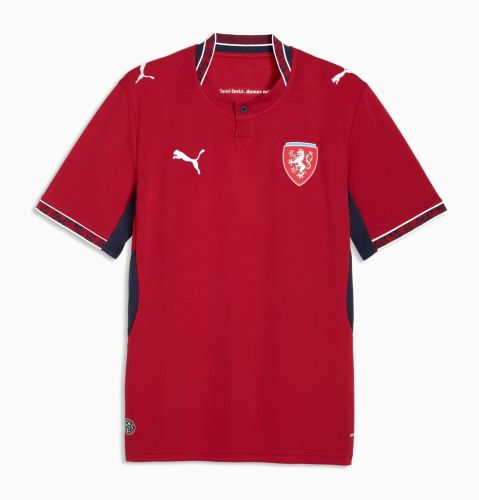
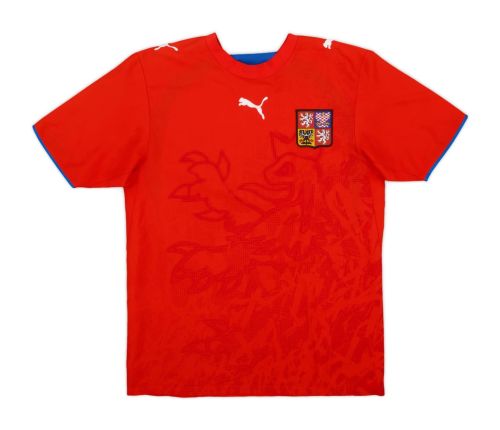
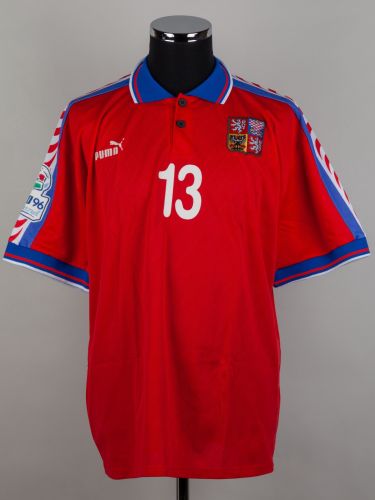
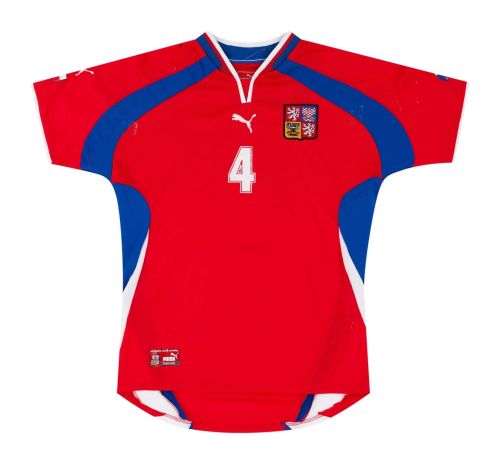
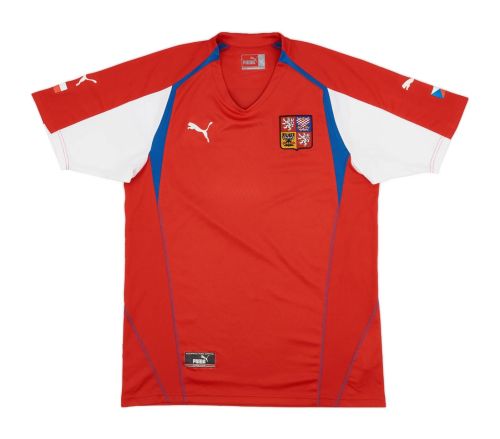
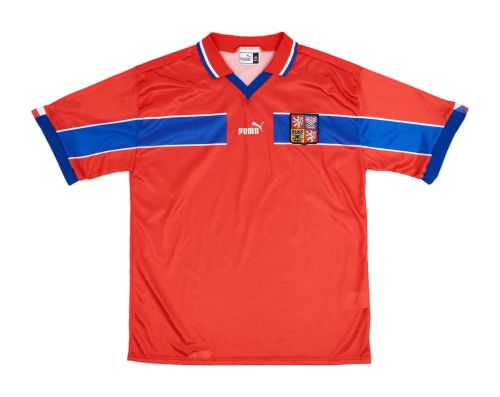
Following Czechia's high-profile switch from Puma to Adidas after 33 years, kit enthusiasts quickly...
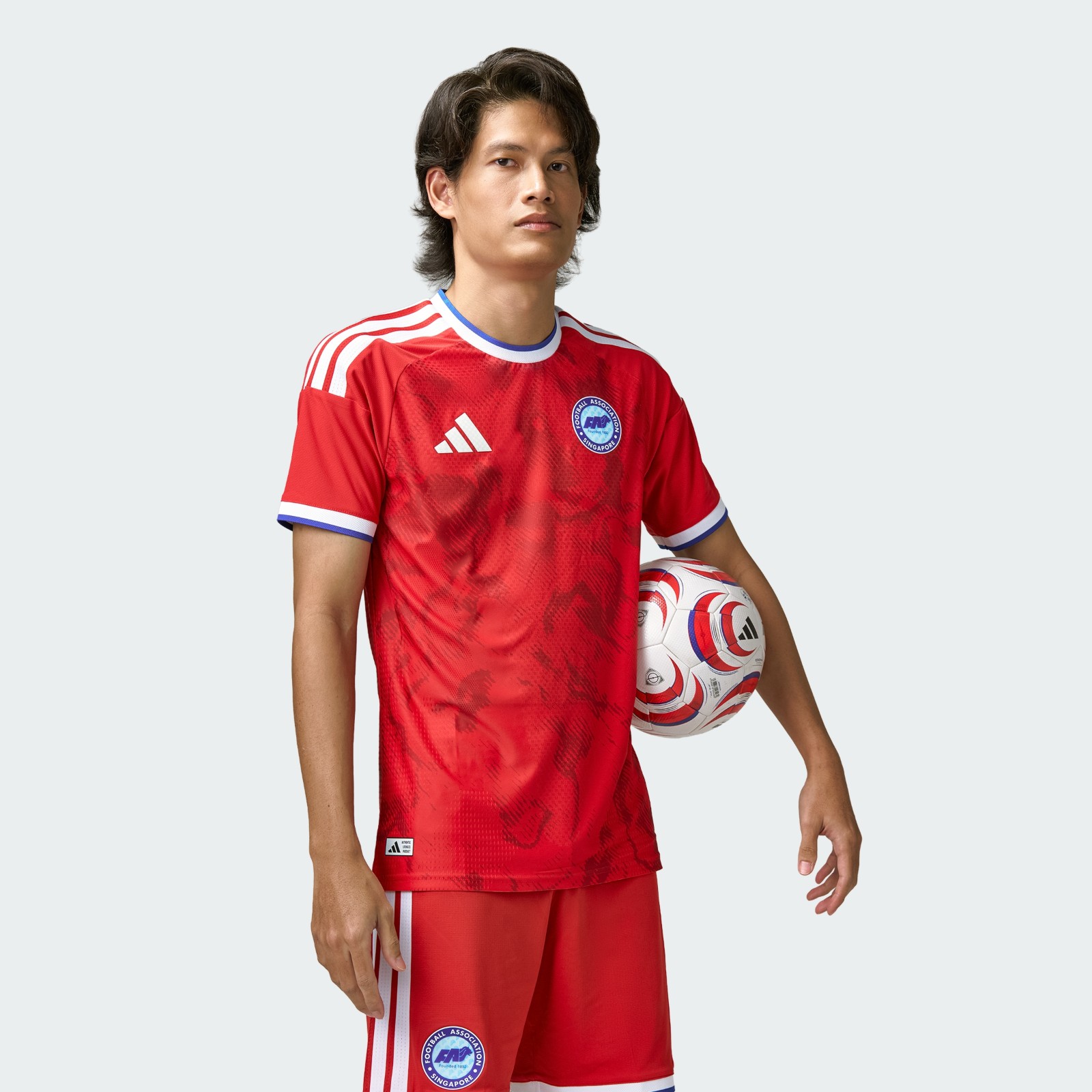
Following Czechia's high-profile switch from Puma to Adidas after 33 years, kit enthusiasts quickly spotted an uncanny similarity between Czechia's newly unveiled 26-27 home shirt and another recent Adidas addition: Singapore. Both national teams recently parted ways with long-term suppliers, with Singapore ending a two-decade partnership with Nike just weeks before Czechia ended their three-decade Puma era, only for both to receive remarkably similar shirts from the Three Stripes.
The resemblance between the two red shirts is unmistakable. Both jerseys rely on the exact same template and trim styling, built around a red base with a white crew collar bordered by thin navy blue piping, matching white sleeve cuffs with identical navy trim, and white Three Stripes across the shoulders. The primary visual difference is found in the texture of the fabric, as Singapore's kit incorporates a subtle tonal wave pattern, whereas Czechia's jersey arrives in a plain, solid red finish. Even the promotional launch shots look almost mirrored, with both federations photographing players seated or standing while holding an Adidas Tiro football.
The duplication stems from Adidas' streamlined template strategy when signing new federations on tight turnaround times. With both agreements sealed relatively late in the cycle, bespoke tailor-made graphics were kept to a minimum, resulting in what fans have labeled accidental twin kits on opposite sides of the globe.
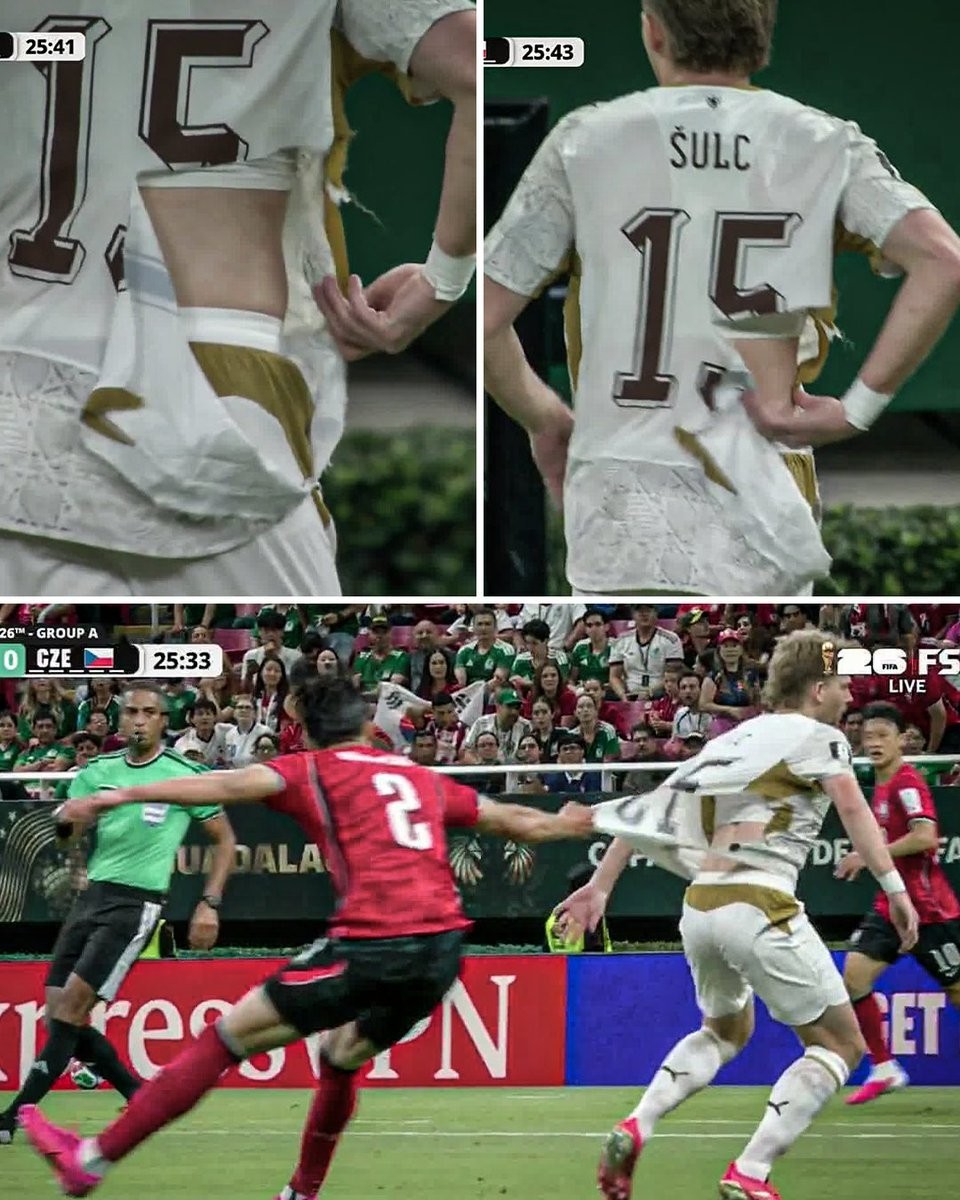
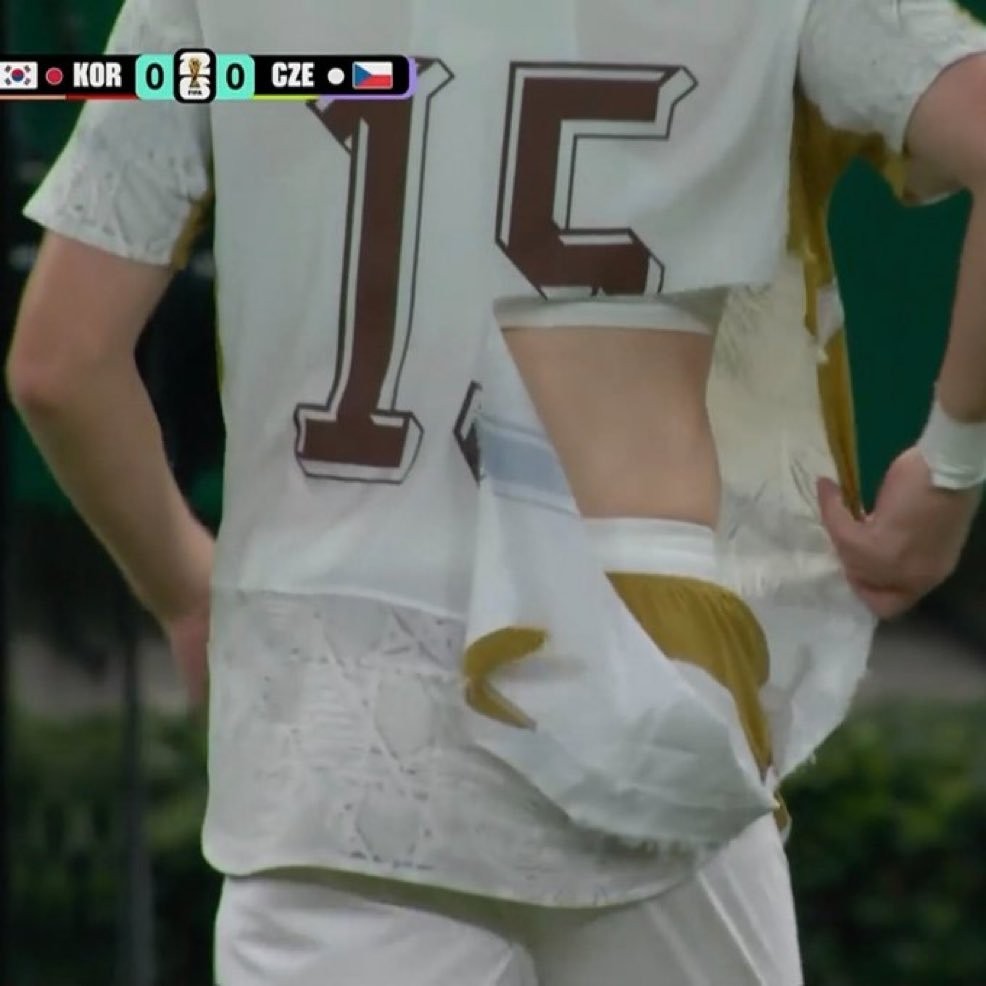
During a recent 2026 World Cup match, Czech Republic player Pavel Šulc experienced a significant kit malfunction when his Puma jersey was heavily torn. Images from the game show the shirt ripped in several places and hanging in tatters, drawing immediate attention from fans and spectators.
The incident has sparked criticism regarding the durability and quality of Puma's current national team kits. Fans on social media were quick to point out the extreme thinness of the material, with many comparing the fabric to paper. The scene also brought back memories of previous instances where Puma kits were easily damaged during major international tournaments, most notably with the Switzerland team at Euro 2016.
While modern football shirts are designed to be highly lightweight and breathable to aid player performance, this level of tearing raises questions about the balance between advanced materials and basic structural integrity. Puma has yet to officially comment on the exact cause of the material failure.